
Surprising stat: a secure exchange environment often requires more steps than a consumer app, and in crypto that extra friction is deliberately defensive. For US-based traders who want fast access to markets without inviting avoidable risk, the small delays and layered checks OKX imposes at sign-in are worth understanding. This article unpacks how OKX login and sign-in mechanisms work, compares the practical trade-offs of different access methods, and offers a reusable decision framework you can apply the next time your trade depends on a fast, safe session.
Readers often treat login as a mechanical chore — username, password, and a one-time code — but on a regulated global platform that blends a centralized exchange, Web3 wallet, derivatives engine, and NFT marketplace, the login process is where several safety, compliance, and user-experience systems intersect. That intersection creates both resilience and edge cases; understanding them changes how you allocate time, tools, and mental bandwidth around trading windows.
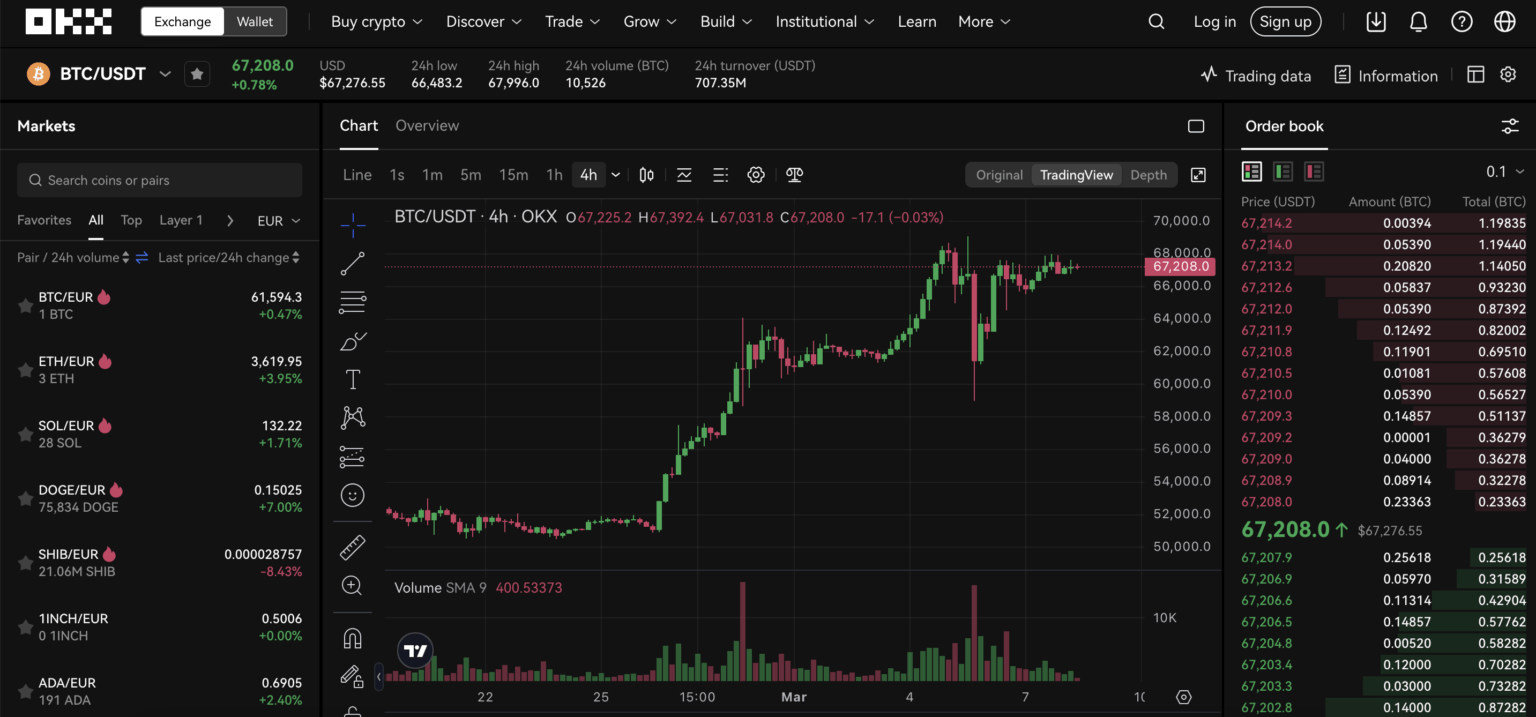
Mechanics: What happens behind an OKX sign in
At a systems level, logging in to OKX does three linked things: authenticate the human, authorize what that person can do, and establish a secure session that ties actions to that identity. Authentication uses passwords plus mandatory two-factor authentication (2FA), and can include biometrics when you use the mobile app. Authorization flows then map your identity to account-level privileges: spot trading, margin limits, API keys, withdrawal approvals, and DeFi wallet access. Session management tracks device fingerprints and can trigger AI-driven anomaly detection that pauses or escalates suspicious attempts. These are not arbitrary obstacles — they are protective gates that make coordinated attacks, unauthorized withdrawals, and account takeovers harder.
Two nuances matter for traders. First, OKX separates centralized exchange (CEX) credentials from the non-custodial Web3 wallet seed phrase model. You log into the centralized account (where OKX holds assets under custody) with password + 2FA and KYC. You access a self-custodial Web3 wallet with a seed phrase or hardware wallet. Conflating the two is a common mistake. Second, OKX stores most assets in air-gapped cold storage protected by multi-signature controls; that reduces systemic theft risk but does not eliminate phishing or social-engineering attacks that target accounts, not custody architecture.
Comparison: Web, mobile, and extension — choose the right sign-in for your use case
Traders typically choose among three access methods: the web platform, the mobile app, or a browser extension (or some combination). Each delivers a different balance of speed, convenience, and attack surface.
Web platform: The desktop web interface exposes the full trading terminal — TradingView charts, advanced derivatives, order types, and account controls. It’s the most powerful for active traders executing complex strategies. Trade-off: desktop sessions are convenient, but browsers have more exposure to extensions, malware, and form-grabbers. Use a locked-down browser profile, disable unneeded extensions, and rely on hardware 2FA where possible.
Mobile app: Offers biometric login and push-based 2FA that are faster during market moves. It’s the best choice for on-the-go monitoring and quick reactions to volatile events. Trade-off: mobile devices may lack the same cleanup tools as desktops and can be lost or stolen. Biometric id reduces friction but increases the cost of an attacker who physically possesses your phone — protect device-level encryption, and enable remote wipe.
Browser extension / Web3 wallet: The extension excels for DApp interactions and cross-chain swaps since it bridges your non-custodial keys with on-chain approvals. Trade-off: extensions expand the attack surface; malicious dApps can request dangerous approvals. When interacting with DeFi through OKX’s extension, treat each approval as a micro-contractual consent and audit allowances proactively.
Where the login sequence can break — and practical mitigations
There are predictable failure modes that cost money or time if you don’t plan: delayed SMS 2FA, locked accounts due to anomalous logins, and KYC rejection that prevents withdrawals. In the US context, KYC is mandatory: be ready with a clear photo of a government-issued ID and a recent selfie for liveness checks. If you’re traveling, expect some friction — IP and device changes trigger security systems and may require manual review.
Mitigations that trade off convenience for durable safety: use an authenticator app or hardware 2FA instead of SMS (harder to intercept), maintain a dedicated trading device or browser profile with minimal extensions, and register a backup biometric or device. For seed phrases in the Web3 wallet, prefer hardware wallets like Ledger or Trezor; the exchange supports them and hardware dramatically lowers exposure to remote malware.
Decision framework: When to prioritize speed vs. security
Here’s a simple heuristic to decide which login method to use right before executing a trade or withdrawal:
– When trading high-leverage derivatives or executing multi-leg strategies: prioritize a secure, stable desktop session with hardware 2FA and minimal background processes. The marginal time cost of a strict login is small relative to execution planning. OKX offers up to 125x leverage on some derivatives; that amplifies both returns and the consequences of a compromised session.
– When you need rapid response to mobile-only catalysts (news, airdrops, spreads): use the mobile app with biometrics and push 2FA, but accept reduced charting depth. Keep a pre-funded stablecoin position to act quickly without drawing from slow withdrawal flows.
– When interacting with DApps, bridges, or staking/DeFi functions: prefer a hardware-backed Web3 wallet and run transactions through the OKX browser extension only when necessary. Approve minimal allowances and revoke open permissions after an operation.
What recently matters and what to watch
Operationally, exchanges periodically delist low-liquidity pairs to preserve orderly markets and reduce tail risk. In the recent update this week, OKX removed a small set of spot pairs — an expected housekeeping move that signals the platform’s ongoing liquidity governance. For traders, delistings matter insofar as they change where you can execute and the liquidity available for exit strategies; monitor pair listings and maintain contingency routes (spot, margin, or cross-chain swaps via the DEX aggregator) so you aren’t trapped if a pair is removed ahead of a position roll.
Signal-watch list: proof of reserves transparency, KYC policy shifts, and cross-border compliance changes. These affect withdrawal policies and limits that in turn shape whether you pre-position funds on-exchange or rely on on-chain bridges. Proof of Reserves provides a baseline assurance that assets are backed, but it does not remove operational or smart-contract risk from DeFi interactions; treat PoR as one input among several.
Heuristic takeaways for US traders
– Expect multi-step login checks; plan them into your trade timing. A sensible rule: don’t initiate high-leverage positions if your account recently changed IPs, devices, or had a KYC update pending. The AI-driven anomaly detection that protects accounts can also delay access.
– Prefer authenticator apps or hardware 2FA over SMS whenever possible. SMS is convenient but more vulnerable to SIM swap attacks.
– Separate custody: use the centralized OKX account for exchange-native trades and the non-custodial Web3 wallet for DeFi exposure. Treat each as an operational silo with its own backup and recovery plan.
– Revoke token allowances you no longer use, and keep a small “operating balance” on exchange for quick trades while storing the bulk in cold or hardware storage.
For a clear how-to on the current OKX web login flow and checklist you can use at the next trade window, see this step-by-step guide to okx login.
FAQ
Why did my OKX account get flagged when I tried to sign in from another state?
OKX uses device and network signals plus AI anomaly detection to flag unusual logins. A sudden change in IP, device fingerprint, or multiple failed 2FA attempts can open a temporary lock pending verification. This is defensive: it reduces unauthorized withdrawals but can interrupt legitimate traders. To reduce risk, register trusted devices, enable hardware 2FA, and notify support ahead of planned travel if you need uninterrupted access.
Is biometric login on the mobile app safe enough for large trades?
Biometrics are convenient and offer strong device-level authentication, but they do not replace cross-layer security. For very large trades or custody-sensitive moves, combine biometric access with exchange-level protections: hardware 2FA, withdrawal whitelists, and segmented fund storage (keep most funds in cold or hardware wallets). Biometrics are one part of an access strategy, not a single-point solution.
What should I do if I lose access to my 2FA device?
Have recovery options preconfigured: backup 2FA codes in a secure password manager, a secondary authenticator device, or a hardware token. If none exist, you’ll need to follow OKX’s account recovery and KYC re-verification process, which can take days. Planning for recovery reduces both downtime and stress during market moves.